
Newsletter Subscribe
Enter your email address below and subscribe to our newsletter

 ByJohn A
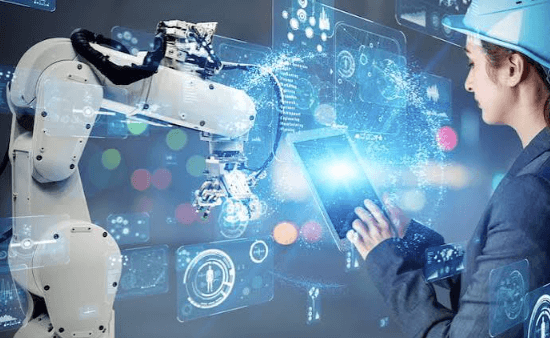
Artificial intelligence drives modern robotics by combining perception, planning, and control into autonomous systems. It relies on sensor fusion, real-time mapping, and adaptive scheduling to optimize tasks with minimal human input. The approach emphasizes disciplined autonomy, robust governance, and governance to address bias and privacy. This convergence yields safer, more efficient operations across industries, while prompting critical questions about reliability, ethics, and scalable deployment that warrant continued examination.
Artificial intelligence is reshaping modern robotics by enabling autonomous perception, decision-making, and control.
The approach analyzes sensor fusion, real-time mapping, and adaptive scheduling to optimize tasks with minimal human input.
Systems confront algorithm bias and data privacy concerns, requiring transparent data handling and validation.
Practitioners pursue hands-on experimentation, iterating designs for robustness, scalability, and freedom to deploy autonomous solutions across diverse environments.
Key AI techniques powering robotic intelligence include perception, planning, learning, and control methods that operate in concert to enable autonomous operation. This framework analyzes sensory data, optimizes action sequences, and adapts through experience. Gesture recognition enhances human-robot interaction, while motion planning ensures safe, efficient trajectories. Combined, these techniques empower robust autonomy, real-time decision-making, and scalable, inventive robotic systems across dynamic environments.
Across industries, autonomous robotics apply the same core AI capabilities—perception, planning, learning, and control—but tailored to domain-specific workflows and constraints.
In manufacturing, precision manufacturing and autonomous dosage optimization streamline production and dosing accuracy.
In logistics, robots enhance throughput with adaptive routing and inventory handling.
Quantum perception can augment sensor fusion, while disciplined autonomy accelerates adaptation without compromising safety.
Ethics, safety, and governance in AI-driven robotics demand a disciplined framework that translates technical capability into accountable practice. Organizations implement ethics auditing to assess bias, transparency, and accountability across systems, while safety governance structures enforce fail-safes, risk assessment, and continuous monitoring. This hands-on, analytical approach fosters responsible innovation, balancing freedom to explore with rigorous safeguards, design discipline, and verifiable compliance.
AI systems for robotic perception in dynamic environments are trained via supervised and self-supervised methods, emphasizing perception calibration and robust domain adaptation; dataset annotation builds diverse, labeled scenarios, while innovations in sim-to-real transfer accelerate practical deployment.
Current AI faces limits in real-time robot decision-making due to compute bottlenecks and unstable perception data; edge latency and data privacy concerns constrain on-device autonomy, necessitating innovative, hands-on strategies balancing rapid judgment with secure, distributed processing.
Multi-robot coordination emerges from distributed planning, enabling autonomous task division and synchronized action. The approach emphasizes robustness, scalability, and low-latency communication, allowing fleets to adapt in real time while preserving freedom and initiative within each agent.
Maintenance costs vary with AI-integrated robots, including sensors, compute, and software upgrades; predictable budgets arise from maintenance budgeting and lifecycle forecasting, enabling proactive replacements and downtime minimization while preserving autonomy and freedom in operation.
See also: Artificial Intelligence in Revenue Management
Robots can achieve limited independence; robot autonomy emerges when systems leverage unsupervised learning to infer tasks from data, enabling incremental adaptation with minimal human input while maintaining safety and verifiable performance in dynamic environments.
AI-driven robotics integrates perception, planning, and control into cohesive, autonomous systems. This convergence enables precise sensing, adaptive decision-making, and robust execution across complex environments. By combining sensor fusion, real-time mapping, and learning-based control, robots become more capable, reliable, and scalable. Analyzing data streams like a well-turnished workshop, the field continually tests, tunes, and deploys innovations. As a simile: AI robotics is a high-precision compass guiding diverse industries toward safer, more efficient futures.



[…] See also: Artificial Intelligence in Robotics […]